Great Products + Operational Excellence = Retail Wins for Conte Coffee 6/10/2026

Conte Coffee brews up an amazing espresso. I know that from personal experience, because I downed three of them each day I was at ECRM’s Private Label Food & Beverage and Foodservice Sessions in Chicago.
But it’s not just the flavor of its products that have landed it private label deals with two major retailers from ECRM’s Coffee, Tea & Cocoa Session. It’s the brand’s operational and supply chain capabilities that also contributed to the buyers’ decisions.
The company started as a small family-owned business and has grown over the years into a brand that makes a variety of coffee and cocoa products in single-serve cups, espresso capsules and bricks, as well as private label and foodservice offerings. It can accommodate massive orders, thanks to its two 5-story tall roasters and lots of automation, and with 90-days of inventory always on hand, orders are never short.
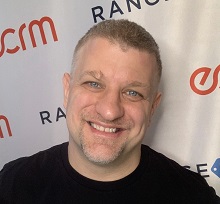
I spoke with COO Mike Conte about the brand’s history and its transition from a local distributor to a private label giant behind some of the country’s top retailers, and what he shared is a masterclass in modern CPG strategy best practices. Here are some takeaways from our conversation. To watch the full interview, see the video below!
Conte’s Origin: Building Grit from the Basement Up
Conte Coffee’s foundations were forged through classic entrepreneurial grit and family labor. In 2001, Conte’s father, who founded the company, balanced a high-stakes corporate position in New York City with late-night customer acquisition and coffee equipment maintenance in New Jersey.
"My father would work in the city all day,” says Conte. “Then at 7:30 in the evening when he got home, he'd load up these machines in the car, go down the street and get restaurant customers. I started in the company when I was 15, fixing the machines in the basement.”
For more than a decade, the business operated as a regional master distributor for a Florida-based representative of an Italian coffee supplier. A major inflection point arrived in 2013 when the partner company dissolved due to systemic issues. Recognizing the Conte family's execution capabilities, the Italian headquarters approached them directly to assume control of their entire foodservice business in the United States.
This expansion prompted Conte to leave a career in financial advising to rejoin the family business, introducing structured financial frameworks that would ultimately fuel their multi-channel scale.
The Pandemic Pivot: Diversifying into Private Label and Retail
Prior to 2019, Conti Coffee’s revenue engine was deeply anchored in the hospitality, restaurant, and foodservice sectors. When Conte stepped into a leadership role, he initiated a vital diversification strategy, expanding into branded retail and private label coffee production. This decision proved to be an essential safeguard when the pandemic severely disrupted the restaurant and hospitality industry.
"Thankfully we went on Amazon and started getting some private label accounts because foodservice was just dead,” says Conte. “But as much as our foodservice business went down, our retail side of things picked up."
This rapid transition underscores an essential truth for modern suppliers: Single-channel dependence introduces immense vulnerability. By swiftly reallocating manufacturing capacity to support retail, e-commerce channels and private label, Conti Coffee successfully converted an industry-wide crisis into an enterprise-scaling event.
Industrial Scale and Technological Quality Control are Key Differentiators
As retail buyers seek private label partners, they look beyond excellent flavor profiles to scrutinize manufacturing scale, safety certifications, and technological advantages. In a commodity market where raw green bean pricing experiences high volatility, a roaster’s competitive advantage relies heavily on technological differentiation and processing efficiency.
While regional roasters are plentiful, very few maintain global food safety initiatives (GFSI) benchmarks or British Retail Consortium (BRC) certifications, according to Conte. Conte Coffee maintains a distinct competitive advantage through its direct partnership with the second-largest coffee roaster in Italy, utilizing an advanced, fully automated facility near Milan and Lake Como.
Conti Coffee's Production Scale at a Glance:
- Roasting Architecture: Two massive, five-story tall industrial roasters.
- Roasting Mechanism: Advanced Neotech air-flow convection roasting technology.
- Storage Infrastructure: 26 automated silos holding two tons of green beans each.
- Automation Standard: Completely enclosed pipeline logistics; zero manual product touchpoints.
Conte Coffee utilizes an air-fryer analogy to contrast their advanced Neotech convection system with traditional drum roasting methods, which typically require roasting separate origins individually before blending them post-grind.
"When you have the neo technology, it's kind of like an air fryer basically,” he says. “You can mix it, which is why I think our blends come out so much better than everyone else's. And the example I like to use is when you're cooking, you don't cook one thing, then put it to the side, then put the next thing. It's that amalgamation of flavors. And that's really when our blends come out in our different espressos."
Furthermore, this industrial scale incorporates rigorous foreign matter sorting protocols. While many roasters lack specialized optical sorting equipment – allowing natural agricultural debris like stones and twigs to bypass packaging lines – Conte Coffee integrates automated sorting arrays to ensure absolute product purity and protect enterprise-level private label brands from consumer complaints or recalls.
The 90-Day Private Label Buffer Rule
For high-volume retail buyers, out-of-stocks represent lost revenue and damaged consumer loyalty. One of Conte Coffee’s most compelling best practices (and a significant selling point during retail pitches) is its proactive approach to inventory management. While standard lean manufacturing paradigms advocate for just-in-time inventory to keep corporate balance sheets light, Conte adopts a safer, static stock methodology for their private label partners.
"Holding 90 days of inventory for the private label customer is very important for them,” says Conte. “The world is not perfect and that happens a lot where they're getting constant orders, and then you realize you have the coffee, but you don't have the bags, you don't have the boxes to produce the item. Holding the 90 days of inventory allows for that buffer stock, if that does occur." (See From Pitch to Shelf: How to Scale Your Supply Chain After Your First Big Retail Win, for more insights on maintaining a strong supply chain.)
Because their premium blends carry an authentic "Made in Italy" designation on the shelf, their supply chain must also navigate transatlantic shipping schedules, port logistics, and potential customs delays. By absorbing the financial carrying costs of 90 days of finished goods and raw component inventory, Conte Coffee protects its retail partners from supply chain disruptions, establishing itself as an exceptionally reliable partner for enterprise-scale operations.
What Coffee Brands Can Expect After Pitching a Buyer
For emerging brands looking to secure major retail accounts, Conte provides a realistic blueprint of the private label commercialization lifecycle. Landing a placement requires navigating an intense 12-to-18-month operational pathway. Suppliers must understand that a successful initial meeting at an ECRM Session is merely the entry point to a rigorous vetting process that comprises three phases, according to Conte.
Phase 1: Compliance Vetting & Multi-Round Bidding
Before pricing discussions or sample evaluations begin, top-tier retailers require complete transparency regarding quality certifications and ethical sourcing metrics. Suppliers must have updated documentation readily accessible to pass this initial screening phase.
"There's one retailer in particular that makes you submit all of your BRC, SQF stuff beforehand, and social compliance stuff, before you're even allowed to bid,” says Conte. “So expect to have those things, make sure you have all your certifications up-to-date, on file, ready to submit."
Once compliance metrics are cleared, suppliers enter a structured, multi-round bidding process. This stage often includes detailed corporate interviews to evaluate technical capabilities, operational redundancies, and long-term financial viability.
Phase 2: The Artwork Bottleneck
A frequent point of friction for corporate product rollouts is the packaging artwork design and approval pipeline. Conte warns that this phase consistently extends beyond initial project timelines due to the multi-layered approval structures within large retail organizations.
"The one piece of advice I'll tell everybody is, if they give you three months for that process of artwork, it's never three months,” says Conte. “Artwork takes the longest time, the back-and-forth, getting everybody on the same page. It always runs over by at least a month, a month and a half. And then finally, then it gets off and you have to review the proofs. Then that gets finally done."
Understanding this bottleneck allows smart suppliers to proactively build realistic padding into their launch schedules, preventing delayed retail rollouts.
The ECRM Advantage: Accelerating Customer Acquisition
Securing meetings with category managers at top-tier retailers is notoriously difficult through conventional cold outreach. Conte attributes a significant portion of their enterprise retail success – including partnerships with Top 5 national and Top 20 regional retailers – directly to connections built during ECRM sessions.
Reflecting on the structured format of ECRM Sessions, Conte notes how the platform dramatically optimizes customer acquisition compared to traditional trade shows. "Anytime I see someone at an ECRM Session for the first time, I always say you've made it to the promised land,” says Conte. “Because I don't really know how you would get meetings, how you would talk to different buyers because it is difficult. This is really a great place to acquire customers, to make different connections."
Conte encourages suppliers to maximize their ECRM schedules by conducting deep pre-meeting research on every scheduled buyer to understand their current product mixes and strategic focuses. He advises utilizing the structured presentation time to let buyers voice their specific needs, allowing the supplier to tailor their portfolio to those requirements.
The Power of Relationship Building Outside the Presentation Room
A crucial element of the ECRM ecosystem is the emphasis on casual networking opportunities, such as evening cocktail hours and shared meals. However, Conte cautions suppliers against maintaining an aggressive sales posture during these informal interactions.
"Outside of the meetings, it's really about just building relationships,” notes Conte. “And if a buyer's looking at you, if you only ever see them and you talk to them like, 'Oh, hey, what'd you think about my product?' That's not good. They had a long day, they’ve had meeting after meeting after meeting. They get to the cocktail hour, they're not trying to have another meeting. They just want to relax. They want to have a good time."
By treating retail buyers as professional peers rather than sales targets during networking events, suppliers build genuine rapport and long-term industry relationships that frequently yield business opportunities down the road.
The Future of Coffee: Functional Wellness
Looking ahead, the coffee category is experiencing a significant shift toward functional integration. Consumers increasingly seek premium beverages that deliver health benefits alongside traditional caffeine, creating a new frontier for private label innovation.
Driven by broad health trends and the rapid rise of the GLP-1 wellness ecosystem, retail buyers are actively seeking formulations enhanced with protein, creatine, collagen, and adaptogens like ashwagandha. Conte highlights this clear market signal while acknowledging the complex research and development challenges it introduces.
"Coffee's all about the taste,” he says. “As soon as you start adding these things into it, you start adding a taste. So the whole challenge is to make the coffee still taste good with all of these functional components inside of it. Then we have to talk about shelf-life. The R&D departments definitely have their hands full when it comes to launching these."
He says that brands that successfully balance these complex nutritional profiles with an exceptional taste experience will capture significant market share in the next generation of private label retail.
Operational Excellence Drives Long-Term Retail Growth
The journey of Conte Coffee Company demonstrates that scaling in the enterprise retail market requires a careful balance of product innovation, manufacturing technology, and reliable supply chain logistics. By utilizing structured networking platforms like ECRM, maintaining strict quality certifications, and implementing customer-first inventory protections like their 90-day stock buffer, suppliers can successfully transition from local operators into vital manufacturing partners for the nation's largest retailers.
Key Takeaways
- Core Subject: An in-depth case study of Conti Coffee Company's growth trajectory, manufacturing innovations, and successful B2B retail client acquisition frameworks via ECRM sessions.
- Manufacturing Innovation: Continuous operational optimization using fully automated Neotech air-flow convection roasting technology and 26 multi-ton silos to eliminate manual touchpoints and ensure flavor amalgamation.
- Supply Chain Best Practices: Implementation of a strict 90-day static buffer inventory model for private label accounts to absorb packaging, shipping, and container delays inherent in international sourcing.
- B2B Networking Strategy: Shifting from transaction-oriented pitches to high-value relationship building during ECRM networking hours, separating active sales pitches from collaborative personal engagement.
- Private Label Product Timelines: Establishing realistic 12-to-18-month commercialization tracks that account for complex compliance screening, multi-round bidding, and systemic artwork review iterations.
- Emerging Category Trends: The accelerated convergence of premium coffee with functional wellness additives (protein, creatine, collagen, and adaptogens) driven by shifting consumer dynamics and the rise of GLP-1 wellness regimens.