ECRM Fireside Chat: Inside Walmart's Evolving Private Brands Strategy 6/24/2026
.jpg)
The private brand landscape is undergoing a massive transformation, shifting from simple, cost-driven alternatives to highly competitive, trend-forward labels that command consumer loyalty. At the center of this evolution is Walmart, which has spent recent years restructuring its internal approach and consumer-facing portfolio to meet changing demands.
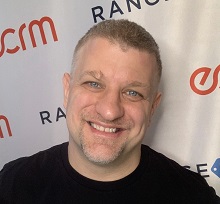
To unpack these changes, ECRM SVP of Retail Wayne Bennett sat with Drew Sadler, VP of Pantry - Walmart Sourcing, for a fireside chat during ECRM’s Private Label Sessions in Chicago.
Sadler is a seasoned retail executive with over 13 years of leadership spanning merchandising, regulatory affairs, and government relations at Walmart. In his current role – which covers dry grocery, snacks, and beverages – Sadler oversees a massive footprint that directly impacts millions of shoppers daily.
During this discussion, Sadler highlighted Walmart's major strategic updates, including the first comprehensive brand refresh for Great Value in three decades, alongside the rapid expansion of its premium Better Goods line. These shifts represent an intentional pivot toward deep institutional ownership and a desire to build private brands that associates and suppliers can champion with pride.
Beyond branding, the conversation dives into the operational realities of modern retail. Sadler outlines how aggressive supply chain mechanization and the growth of omnichannel shopping are fundamentally changing expectations for manufacturers. From utilizing AI tools like ChatGPT for digital shelf optimization to navigating cost pressures like $6-a-gallon diesel fuel, this interview provides a clear roadmap for how suppliers can become agile, strategic partners in the Walmart ecosystem.
The Evolution and Ownership of Walmart Brands
ECRM: We've seen the transition of your department's name to Walmart Brands. Why does this better capture the essence of your group today, and how does it support a more frictionless shopping experience compared to previous years?
Sadler: It really comes down to that ownership piece. Whether you are a merchandiser, a product developer, or working in sourcing, it is about shifting the mindset to be genuinely proud of the brand. This is ours; it has our name on it. It is also a challenge we share with our suppliers. Regardless of whether a manufacturer is making a Great Value product for us or an item for Target, we want them to be just as proud of what that brand represents when we ask them to build those products. That focus on ownership, love, and support has translated into clear results.
Right now, it is an incredibly exciting time at Walmart. For the first time since we launched Great Value 30 years ago, we are undergoing a comprehensive brand refresh, and the very first products are starting to hit shelves today. Earlier this year, we also announced that we are removing artificial colors and eliminating a lot of problematic ingredients from our products. It is a behemoth of a brand – one of the largest food brands in the world. We are stepping into a place where we recognize this isn't just a private label or a cheaper alternative anymore; it is ours, and we should be proud of it.
An Update on Walmart’s Better Goods Line
ECRM: About two years ago, you had a massive, trend-forward launch with Better Goods. Can you share a state of the union on the brand's performance, and are any specific categories over-performing traditional private label?
Sadler: Right at the two-year mark, Better Goods has grown to over 300 items and is expanding quickly. It is doing well. Now, we certainly aren't paying for the new home office off of Better Goods alone – Great Value remains the core brand that truly moves the needle for us – but it has achieved several critical goals:
- Brand Halo: It has given Walmart an important brand halo.
- Higher-Income Customers: It is accelerating our traction with higher-income customers, a demographic growth trend that continues to pick up speed right now.
- Category Excitement: It has introduced fun into categories that were historically very sleepy.
For example, our sourcing team put high-quality fruit into a clear jar where customers could actually see the product, and we have seen huge results in what was a stagnant category.
In terms of performance variance, the categories where Better Goods has lagged a bit are heavily SKU-heavy sections where national brands already deliver a lot of flavor innovation and experimentation. Where we have truly excelled is where we stepped in to give the customer something new they didn't previously have an option to buy. We brought unique flavor profiles into the frozen department like premium Italian pizza and chicken wings featuring Korean and distinct spicy flavors rather than just standard barbecue or plain options. Customers clearly had an appetite to try new things that national brands weren't delivering, and Better Goods successfully filled that gap.
Premium Brands Coexisting with Everyday Low Price
ECRM: How does a premium tier like Better Goods coexist with Walmart's core EDLP mission, and is the quality gap between private labels and national brands finally closing?
Sadler: The narrative around whether private brands are finally catching up is old news – that gap closed a long time ago, especially among major retailers. What I love about our current mission is our laser-sharp focus. Great Value is unapologetically a National Brand Equivalent (NBE). Our goal is to deliver the exact same quality as the brands customers love, but at a much better cost.
Better Goods, on the other hand, acts as our fun sandbox. It allows us to innovate and create unencumbered by the strict restrictions that come with maintaining an exact NBE match. The price points are inherently different, but it gives our customers options. We are a house of brands at Walmart and we always will be; we love our large CPG partners. But customers shouldn't have to buy national brands just to get great quality – they should be able to save money for their family and enjoy the exact same quality experience.
Non-Negotiables for the Digital Shelf
ECRM: As online sales grow for own brands, what are the absolute non-negotiables for a product to live on the digital shelf, and why is digital excellence a core requirement for growth?
Sadler: Digital excellence is mandatory because that is simply where the customers are going. Within the international Walmart umbrella, we have markets where over 50% of all commerce is executed via online channels. While we are not at that half-and-half mark in the US yet for food and consumables, we are moving rapidly in that direction.
Historically, private brands have lagged behind large CPG companies online because CPG firms deploy massive teams dedicated exclusively to optimizing product images and descriptions to entice clicks. In contrast, private label across the retail industry has often kept things basic – such as a simple picture with the text "long grain white rice".
We have to get much better at addressing this. We operate in a resource-constrained environment because our structural costs are lower, meaning we don't have an army of people manually polishing every image and description. However, the world has changed. Today, someone can log onto ChatGPT and generate an amazing product description in less than five minutes, which can be immediately loaded into our product pages.
The days of a private label manufacturer simply filling pallets, putting them on a truck, and sending them to a warehouse are long gone. We are fulfilling an increasing number of orders via online channels, shipping directly to homes, and utilizing third-party drivers who pick items straight from our stores. Suppliers must build flexibility into their operations to support these omnichannel transactions.

Supply Chain Automation and Logistics
ECRM: What does this audience need to know about Walmart's supply chain and logistics as an own-brand manufacturer?
Sadler: Our supply chain is changing rapidly. Walmart, alongside most major retailers, has invested an insane amount of capital to automate operations. This mechanization introduces new complexities. Boxes are no longer being handled exclusively by human hands; they pass through automated systems, which means a product experiences a much rougher life from the time it leaves a supplier's facility until it lands on a shelf or a customer's doorstep.
Manufacturers must adapt to this mechanized reality. In fact, Walmart is currently rolling out programs to penalize suppliers that incur repeated manual touches throughout our supply chain because it disrupts the flow of automated systems.
Furthermore, suppliers can no longer guarantee that everything will move in full pallet load quantities. Walmart operates 42 Regional Distribution Centers across the nation – 36 of which are in the grocery channel – plus dozens of fulfillment centers for home delivery. While core grocery items move massive volume daily, moving down the longer tail of SKUs requires extreme operational flexibility.
We understand that packing for case picking or paying for manual case picking introduces structural inefficiencies for manufacturers. However, when evaluating new partners, an increasingly critical question we ask is whether their facilities are operationally prepared to support this logistical shift.
Defining the Agile Supplier
ECRM: You've mentioned that suppliers must be nimble to succeed today. In your view, what defines an agile own-brand supplier?
Sadler: Beyond the supply chain flexibility we just discussed, agility is heavily rooted in the product development lifecycle. The most successful agile suppliers are those who take quick feedback from our teams, turn around product samples rapidly, and approach development as an iterative partnership.
Conversely, we encounter other suppliers who send samples that are close to what we need, but after we provide feedback, it takes them three months to return a revision that is still not quite right. Then it takes another two months for the next iteration. By that point, the supplier has missed an entire modular cycle. That means the item will not make the shelf, and we will not consider activating it for at least another full year.
To put this in perspective, the average product developer at Walmart supports roughly five different merchants. They manage incredibly broad desks and have very little time. The suppliers who make their lives easy by being responsive and acting instantly on feedback are the ones who achieve long-term success.
Navigating Cost Pressures and Tariffs
ECRM: We are all feeling the impact of rising macro costs. How are you navigating conversations with suppliers to ensure you deliver EDLP to consumers while managing higher costs for raw materials?
Sadler: It is undeniably tough. We have been navigating over a year of tariffs, and during recent travel in Pennsylvania, I saw diesel selling for over $6 a gallon. This macro environment puts an immense amount of pressure on the freight side of our business.
Our primary tool for navigating these pressures is absolute transparency. Over the last two years, we have pushed for extreme clarity regarding cost breakdowns. I tell our partners all the time: I need your business to be profitable. If a supplier is not profitable, it will inevitably result in a bad outcome for both of us one way or the other.
However, we require open visibility into what comprises a product's cost of goods. What does the packaging entail? What are the specific raw material and ingredient costs? What are the labor costs and transportation adjustments?
When we layer a fair profit margin on top of those clear metrics, navigating economic volatility becomes much simpler compared to the transactional retail relationships of five years ago. Back then, a supplier would simply state a flat cost for a widget, leaving both parties to argue blindly over whether a price hike was genuinely justified. Today, if we are completely transparent with one another, validating an earned cost increase is seamless – and it is equally easy to identify when an increase is unjustified so my team can address it. If a cost structure increase is verified, Walmart will support it.
Becoming a Strategic Partner with Walmart Brands
ECRM: What distinguishes a good supplier from a truly great strategic partner for Walmart brands?
Sadler: It requires an active, proactive approach rather than a passive one. Our internal teams do a fair amount of self-driven innovation, where a product developer spots an emerging brand or trend and asks our existing manufacturing base to replicate or adapt it for Walmart brands. But remember, our product developers are managing massive portfolios across multiple merchants.
The absolute fastest way to become a strategic supplier is to make our sourcing and development teams' jobs easy. I want our sourcing managers to be in a position where, if they propose a new vendor, I immediately ask, "Why aren't we just using our existing partner?" I say that because our best partners are highly transparent, deeply trusted to systematically drive unnecessary costs out of the supply chain, highly responsive with samples, and consistently bring fresh innovation to drive sales.
If a supplier simply sits back with a notebook waiting to be handed instructions, they will likely never achieve a true strategic relationship with Walmart. We are fundamentally a low-cost retailer. That structural reality means we do not have an excess of corporate staff to handle the sheer volume of work requested of us – so we need our suppliers' help. If you make our retail teams' jobs easier, you will get a lot of calls from us.
Future Sourcing Needs and Consumer Trends
ECRM: Looking ahead, what emerging consumer trends are on your radar, and what specific sourcing needs are you looking for right now?
Sadler: While there will always be a steady consumer demand for indulgent items like ice cream, chips, candy, and snacks, the broader customer base is shifting dramatically toward functionality and wellness. I joke with my team that if you put protein on literally any product right now, it will sell out tomorrow. We are seeing rapid trends focusing heavily on fiber, cleaner formulations, and the macro lifestyle impacts of GLP-1 medications. Consumers increasingly recognize that what they eat fuels their bodies, and they want to be more conscious about it. This consumer shift is exactly why Walmart is proactively removing artificial colors from our food items.
At the same time, micro-trends can catch everyone off guard. Take canned sardines, for example – a category that sat quietly on shelves for 40 years. Suddenly, via influencer communities and brands making it cool online, demand skyrocketed precisely during a period of historically poor global sardine catches. Healthier foods and wellness trends are absolutely here to stay.
In terms of immediate sourcing needs, Walmart is unapologetically an EDLP retailer, which means I am tasked with bringing home everyday low cost from our manufacturers. Cost control over the next year or two is going to be incredibly difficult for manufacturers, which inherently impacts retailers. We are looking for partners who align with three core criteria:
- Scalable Innovation: Manufacturers who can bring great products and cool new concepts to market, but possess the explicit capacity to handle the immense scale of the Walmart beast. Not everyone is ready for our volume.
- Cost DNA: Partners who are just as laser-focused on keeping their internal cost structures low as we are, because that focus is embedded in our DNA.
- Portfolio Capabilities: We aren't looking for vendors who can only supply one or two distinct items. We want strategic partners who can bring us cross-category innovation across multiple segments and show a true willingness to scale their entire portfolio alongside Walmart.